

Metal Roof Flashing (Types, Problems & Full Repair Guide)
 10/16/2024
 8 Min Read
Metal roof flashing is the thin metal installed wherever your roof meets a wall, chimney, valley, or edge, and it is the single most important defense against roof leaks. When flashing fails, water rarely announces itself right away; instead it works silently beneath the roofing, rotting the deck and staining ceilings before you notice. Because flashing sits at the most leak-prone transitions on your roof, understanding where it fails and what the warning signs look like can help you catch a problem before it becomes major water damage. This guide breaks flashing down by location, flags the failure signs at each, and explains why repairs belong in professional hands.
- The #1 leak source: Flashing failures cause more roof leaks than the roofing material itself.
- Location matters: Valleys, chimneys, sidewalls, and edges each fail in their own way.
- A professional job: Flashing repair carries real water-intrusion risk and is not a DIY fix.
Below, we explain what flashing does, break down the four critical locations with their failure signs, and cover why this is professional-only work.
What Metal Roof Flashing Does
Before looking at where flashing fails, it helps to understand the job it performs.
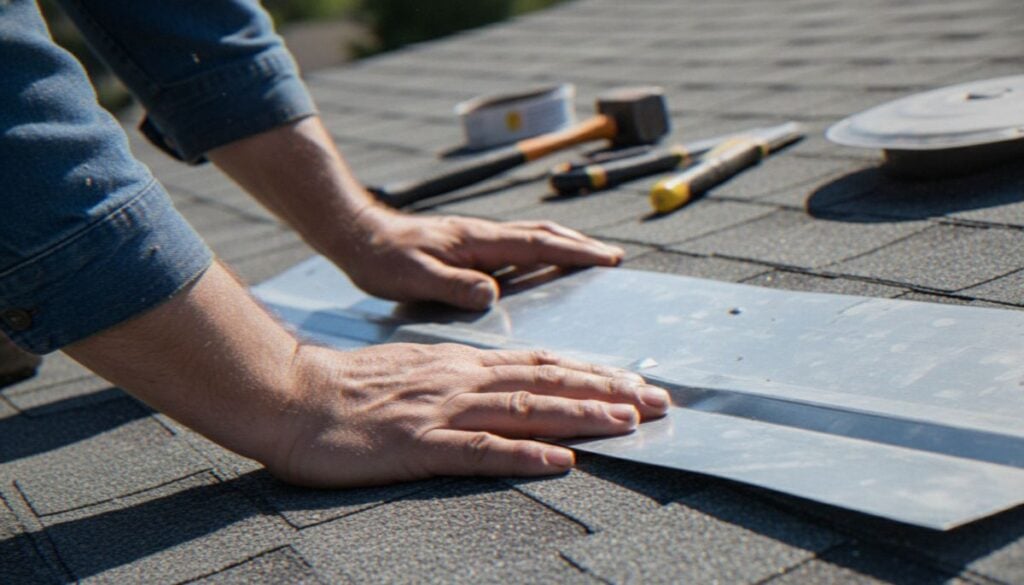
Flashing bridges the seams and transitions where two surfaces meet, directing water back onto the roof so it drains away instead of seeping in. It is the first line of defense at exactly the spots where roofs are most vulnerable.
- Directs water: Channels runoff away from walls, chimneys, and joints toward the gutters
- Prevents water damage: Stops intrusion that leads to rot, mold, and structural damage
- Extends roof life: Protects the deck and underlayment from hidden moisture
- Seals transitions: Covers the gaps where the roof plane meets vertical surfaces and edges
4 Locations: Where It Fails and the Warning Signs
Flashing is not one part but a system of details, each placed at a specific high-risk location. The four areas below account for the vast majority of flashing-related leaks, and each shows its own warning signs. Knowing what to watch for helps you act before water reaches the inside of your home.
1. Valley Flashing
Valley flashing runs down the channel where two roof slopes meet, carrying the combined runoff of both planes. Because valleys move a large volume of water fast, even a small crack, corrosion spot, or debris dam can push water sideways and under the roofing. This is one of the most common and fastest-acting leak points on any roof.
- Failure signs: Cracked or corroded metal in the valley, debris buildup, water stains on ceilings below a valley, or visible rust streaks
- Common causes: Debris damming, aged or undersized metal, and improper lapping or centering
2. Chimney Flashing
Chimney flashing is the most common leak source on residential roofs because a chimney has multiple flashing zones that can each fail independently: base flashing, step flashing up the sides, a cricket or saddle behind wider chimneys, and counter flashing set into the masonry. When mortar erodes or the metal works loose, wind-driven rain slips in behind it. Surface caulk is a frequent but temporary band-aid that cracks within a year or two.
- Failure signs: Water stains near the chimney, lifted or loose metal, gaps between flashing and brick, heavy old caulk beads, or shadow lines along the flashing
- Common causes: Eroded mortar, counter flashing only surface-sealed instead of cut into the masonry, and missing cricket on wide chimneys
3. Sidewall and Step Flashing
Sidewall flashing protects the joint where a sloped roof meets a vertical wall or dormer, using individual L-shaped step-flashing pieces layered with each course. A kickout flashing at the base is critical to divert water into the gutter and off the siding. When step flashing is replaced with a single continuous strip, or a kickout is missing, water gets behind it and into the wall.
- Failure signs: Stains on upper interior walls, peeling paint or rot on exterior siding below the roofline, and streaks down the wall near the roof edge
- Common causes: Continuous flashing used instead of proper step pieces, missing kickout flashing, and dried-out sealant
4. Drip Edge Flashing
Drip edge runs along the eaves and rakes to guide water into the gutters and keep it from wicking back behind the fascia. Though it sits at the roof’s edge rather than a wall or chimney, a missing, short, or corroded drip edge lets water creep under the roofing and rot the fascia and deck edge over time. It is also required by code on modern installations.
- Failure signs: Rotting or stained fascia, water marks behind the gutters, and peeling paint along the roof edge
- Common causes: Missing or undersized drip edge, corrosion, and improper overlap with the underlayment

Worried About a Leak? Get a Professional Inspection
If you have spotted any of the warning signs above, especially active stains or dripping, the safest next step is a professional roof inspection before the damage spreads. Water follows framing, insulation, and drywall far from where it enters, so a small flashing failure can become a large repair quickly. Shake Guys can locate the true source, document the issue, and repair it with new metal rather than a temporary sealant patch. Contact Shake Guys today to schedule your inspection and protect your home from water damage.
Why Flashing Repair Is a Professional Job
Given the water-intrusion risk, flashing repair is not a do-it-yourself project, and treating it like one often makes the problem worse.
Flashing is a system that must be integrated with the roofing, the underlayment, and sometimes the masonry, not simply sealed on top. According to the 2021 International Residential Code, flashing against a vertical sidewall must be done by the step-flashing method, and crickets or saddles are required on the ridge side of chimneys wider than 30 inches.
- Water-intrusion risk: A small mistake can channel water directly into the structure
- Integration required: Proper repair re-details the metal with the roofing, not caulk over the top
- Masonry work: Chimney counter flashing must be cut into mortar joints, a specialized task
- Safety and warranty: Roof work at height carries fall risk, and correct repair protects your warranty
The Problem With Caulk-Only Repairs
One of the most common flashing mistakes is relying on sealant instead of proper metal detailing.
Caulk can look like a fix, but it is a short-term patch over a structural problem. Here is why it does not last.
- Temporary at best: Sealant dries, cracks, and fails within a year or two
- Hides the real issue: Caulk masks a flashing detail that needs re-working, delaying a proper fix
- Repeated patching: Heavy layers of old caulk are a sign of a recurring, unresolved leak
- Proper fix: Lasting repair means replacing or re-detailing the metal and re-tucking masonry
Types of Metal Roof Flashing
Beyond location, it helps to know the specific flashing components a professional works with.
Each type is shaped for a specific job, and a complete roof uses several together. Here are the main ones.
- Step flashing: L-shaped pieces layered with shingles at roof-to-wall intersections
- Counter flashing: Set into masonry to cover and protect step flashing at chimneys and walls
- Valley flashing: Heavier-gauge metal that channels concentrated runoff down roof valleys
- Drip edge: Edge metal at eaves and rakes that directs water into the gutters
- Vent pipe flashing: A metal base with a rubber boot that seals around plumbing and exhaust pipes
Maintaining Metal Roof Flashing
While repairs are a professional job, homeowners can help flashing last through simple, ground-level attention.
Regular observation and keeping the roof clear go a long way toward preventing flashing failures. Leave anything beyond ground-level observation to a professional.
- Watch for signs: Check ceilings and exterior walls for stains, especially after storms
- Keep valleys clear: Debris damming in valleys is a leading cause of leaks
- Clean gutters: Clogged gutters back water up toward the drip edge and fascia
- Schedule inspections: Have a professional inspect flashing at least once a year and after major storms
Because any work at the roofline carries fall risk, homeowners should keep inspections to safe, ground-level observation and review fall prevention and roof safety procedures from OSHA before going near a ladder. Anything more should go to a professional.
Protect Your Home With Shake Guys
Metal roof flashing may be one of the least visible parts of your roof, but it does one of the most important jobs: keeping water out at the most vulnerable transitions. Because flashing failures at valleys, chimneys, sidewalls, and edges are the leading cause of roof leaks, and because repairing them correctly carries real water-intrusion risk, this is work best left to experienced professionals. If you have noticed staining, dripping, or any of the warning signs covered here, do not wait for the damage to spread. Shake Guys has the expertise to locate the source, repair it with proper metal detailing, and keep your home safe and dry. Contact us today to discuss your metal roof flashing and schedule a professional inspection.


Schedule a Free Inspection & Consultation
We look forward to providing you with premium customer service & high-quality results.