

Do Metal And Shake Roofs Need Snow Guards? (7 Reasons To Install Them)
 11/9/2026
 8 Min Read
Roof snow guards are small but important devices that hold accumulated snow on your roof so it melts and releases gradually instead of sliding off all at once in a dangerous avalanche. Whether your home has a metal or shake roof, snow guards can protect people, property, and your roof system through harsh winters. Metal roofs in particular benefit, because their smooth surfaces shed snow fast, while textured shake roofs hold snow better on their own but can still need guards in heavy-snow areas. This guide explains how snow guards work on each roof type and seven reasons to install them.
- Metal needs them most: Smooth metal roofs shed snow suddenly and dangerously without guards.
- Shake benefits too: Textured shake holds snow better but can still slide in heavy snow.
- Safety and protection: Snow guards protect people, gutters, landscaping, and property below.
Below, we cover what snow guards do, whether metal and shake roofs need them, and seven reasons to install them.
What Are Roof Snow Guards?
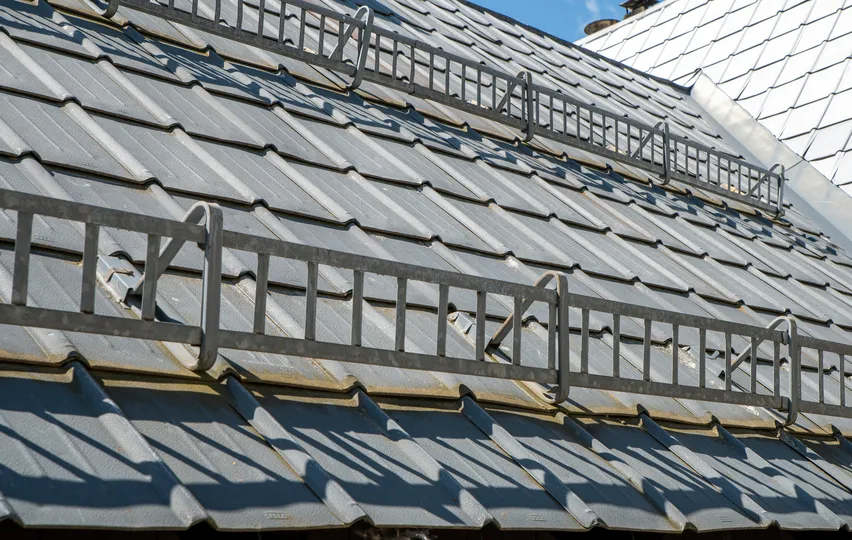
Roof snow guards, also called snow retention systems, snow fences, or snow stops, are devices mounted on a roof that grip the snowpack and hold it in place. Instead of letting snow and ice release in one heavy, sudden slide, they allow it to melt and drain off gradually.
Snow guards are installed in patterns across the roof, often concentrated above entries, walkways, gutters, and lower roof sections where sliding snow would do the most harm. They come in a few styles, including pad or pad-style guards, continuous bar or rail systems, and clamp-on guards designed for standing seam metal roofs.
- Snow retention: Guards hold the snowpack so it melts rather than avalanches
- Strategic placement: Concentrated above doors, walkways, gutters, and lower roofs
- Multiple styles: Pad, bar or rail, and clamp-on options for different roofs
- Gradual release: Snow leaves the roof slowly and safely over time
Do Metal Roofs Need Snow Guards?
Metal roofs are the most common candidates for snow guards because their smooth, slick surfaces shed snow extremely well, sometimes too well. Understanding this helps explain why metal roof snow guards are so widely recommended in snowy regions.
When sun warms a metal roof, it creates a thin melt layer beneath the snow, and hundreds of pounds of accumulated snow can release at once in a rooftop avalanche. According to Angi, snow guards for roofs prevent heavy snow and ice from sliding off all at once, protecting people and property below from dangerous avalanches. In heavy-snow areas, they are considered essential rather than optional on metal roofs.
- Slick surface: Smooth metal lets snow slide off all at once
- Avalanche risk: Hundreds of pounds can release suddenly as the roof warms
- Widely recommended: Metal roof snow guards are essential in snowy climates
- Perimeter or priority zones: Installed around the roof or above vulnerable areas
Do Shake Roofs Need Snow Guards?
Shake and other textured roofs are less prone to sudden snow slides than metal because their rough surface provides natural friction that grips the snow. That does not mean they never benefit from snow guards, though.
On steep shake roofs or in areas with heavy snowfall, even a textured surface can release a large load of snow unexpectedly, especially as it melts and refreezes. In those situations, snow guards add a layer of protection for walkways, entries, and gutters below. A professional can assess whether your shake roof’s pitch and your local snowfall warrant them.
- Natural friction: Textured shake grips snow better than smooth metal
- Less often required: Shake roofs need guards less than metal roofs do
- Still possible: Steep pitches and heavy snow can cause slides
- Case by case: A professional can judge whether your shake roof needs them
7 Reasons to Install Snow Guards
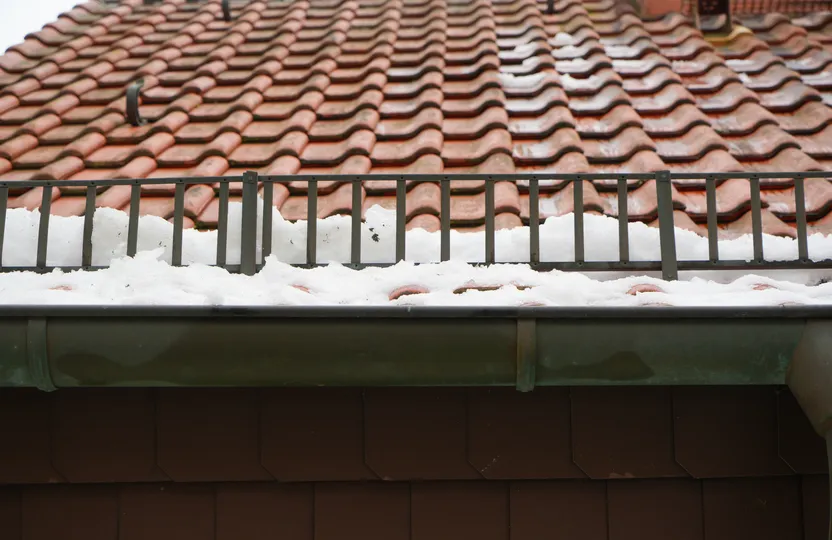
While snow guards are not required on every roof, they deliver real protection in snowy climates. Here are seven reasons homeowners install them on metal and shake roofs alike.
Each reason below reflects a specific risk that uncontrolled sliding snow creates. Together they make a strong case for snow retention in heavy-snow regions.
1. Protect People and Pets Below
The most important reason is safety. A sudden release of hundreds of pounds of snow and ice can seriously injure anyone standing below, whether at a doorway, on a walkway, or near the eaves. Snow guards hold that load in place so it cannot avalanche onto people or pets.
- Prevent injury: Stop heavy snow from falling on people below
- Protect entries: Keep doorways and walkways safe to use
- Peace of mind: Reduce a serious winter safety hazard
2. Protect Your Gutters and Downspouts
When a large snow load slides off a roof, gutters are often the first casualty, torn loose or crushed by the weight and momentum. Snow guards reduce the likelihood of a heavy snowpack sliding directly into your gutters, helping protect that eave hardware through winter.
- Prevent gutter damage: Reduce the force of snow hitting gutters
- Protect downspouts: Limit sudden loads that tear hardware loose
- Save on repairs: Avoid costly gutter replacement after slides
3. Prevent Damage to Property Below
Sliding snow does not just threaten gutters; it can crush HVAC units, break windows, dent vehicles, and damage decks or outdoor features below the roofline. Snow guards keep that snow on the roof so it cannot damage whatever sits beneath the eaves.
- Shield equipment: Protect HVAC units and outdoor features
- Guard vehicles: Prevent snow slides onto parked cars
- Protect structures: Keep decks, railings, and windows safe
4. Protect Landscaping
Shrubs, plantings, and hardscaping near the house can be flattened or damaged by a sudden avalanche of snow and ice off the roof. Snow guards help preserve your landscaping by preventing those heavy, concentrated snow dumps along the foundation.
- Preserve plantings: Protect shrubs and gardens near the house
- Protect hardscape: Shield pathways and features below the eaves
- Maintain curb appeal: Avoid winter damage to your landscape
5. Protect Lower Roof Sections
On homes with multiple roof levels, snow sliding off an upper roof can slam onto a lower roof section with enough force to cause damage. Snow guards on the upper roof prevent that impact, protecting the lower roof and its shingles or panels.
- Prevent impact: Stop upper-roof snow from hitting lower roofs
- Protect materials: Shield lower shingles and panels from damage
- Whole-system safety: Keep every roof level protected
6. Protect the Roof and Eave Hardware
Repeated heavy snow slides can wear on the roof edge, fascia, and eave hardware over time. By holding snow in place and releasing it gradually, snow guards reduce that stress and help protect the roof system itself through years of winters.
- Reduce wear: Limit stress on the roof edge and fascia
- Protect the system: Preserve eave hardware over time
- Extend roof life: Reduce repeated winter impact on the roof
7. Manage Snow Load Release
Snow guards help control how and when snow leaves the roof, distributing the snowpack and allowing it to melt off on a predictable schedule rather than all at once. This managed release turns a roof that sheds snow dangerously into one that handles it safely.
- Controlled release: Snow melts and drains gradually
- Even distribution: Guards spread the snowpack across the roof
- Predictable: Snow leaves on schedule, not in a sudden slide
What Snow Guards Do Not Do
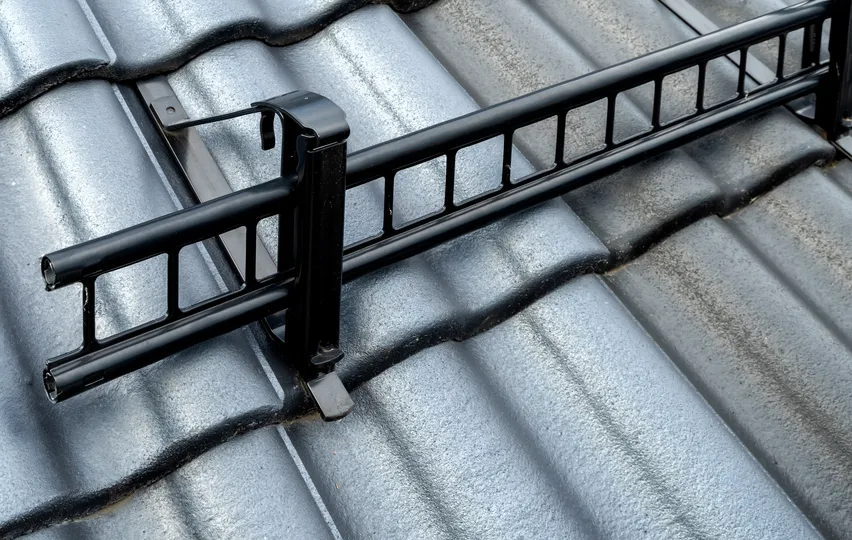
To set the right expectations, it helps to know the limits of snow guards. They are a safety and property-protection tool, not a cure-all for every winter roof issue.
Snow guards do not prevent ice dams, which are caused by heat loss and ventilation issues rather than sliding snow, and they do not increase your roof’s structural capacity. They should also never be attached to gutters, which are not built to bear snow loads. Understanding these limits helps you pair snow guards with the right ventilation and insulation strategy.
- Not for ice dams: Ice dams require ventilation and insulation fixes
- Not structural: Guards do not add load capacity to the roof
- Not gutter-mounted: Snow guards attach to the roof, not the gutters
- Part of a system: Best paired with proper ventilation and insulation
Protecting Your Home With the Right Snow Retention
Whether you have a metal or shake roof, snow guards are a smart investment in snowy climates, protecting people, pets, gutters, landscaping, and your roof system from the dangers of sliding snow. Metal roofs benefit the most because their smooth surfaces shed snow suddenly, while shake roofs may need them on steep pitches or in heavy-snow areas. The best way to know what your roof needs is a professional assessment of your roof type, pitch, and local snowfall. Shake Guys specializes in cedar, composite shake, and slate roofing and complete roof systems, backed by more than 20 years of experience, an A+ BBB rating, and factory-trained crews. Reach out to Shake Guys today to schedule your free 17-point roof inspection and find out whether snow guards are right for your home.


Schedule a Free Inspection & Consultation
We look forward to providing you with premium customer service & high-quality results.